
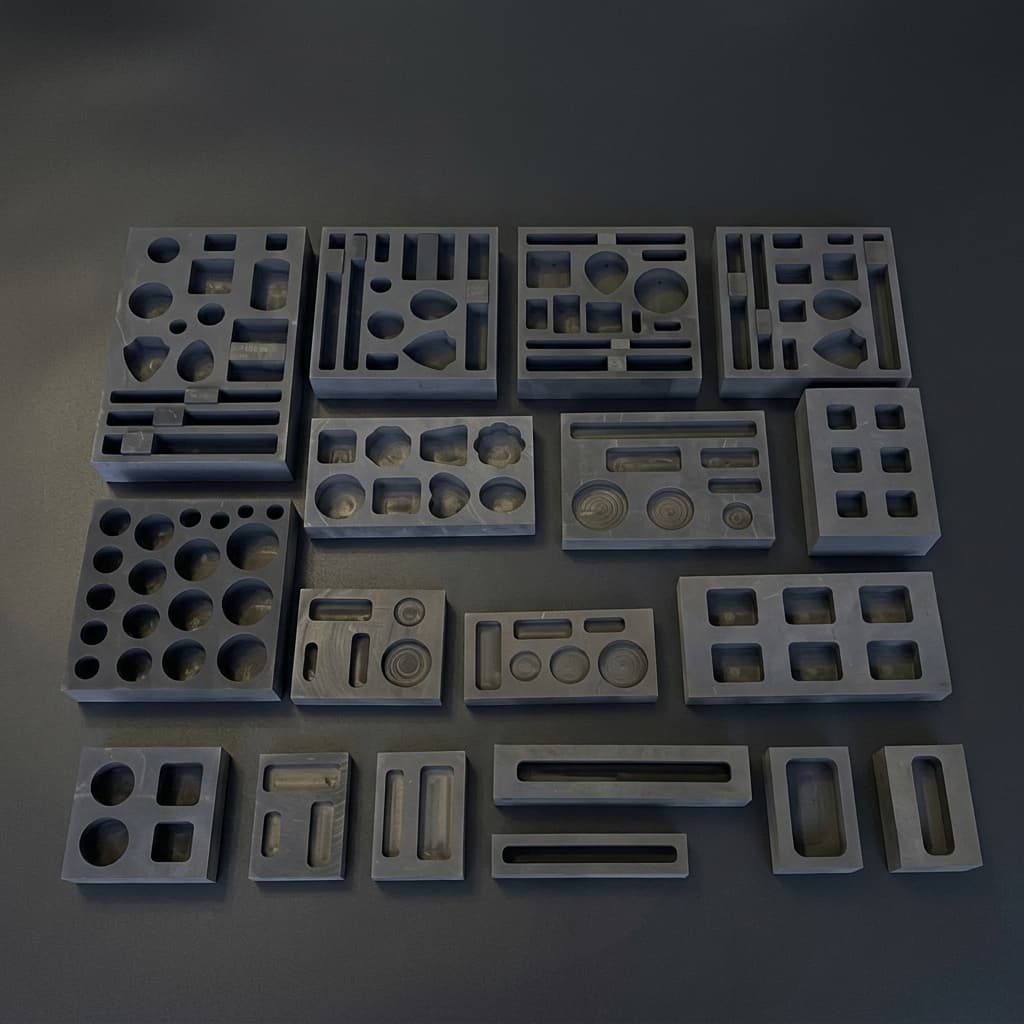
Graphite Heating Elements for Vacuum Furnaces: Design and Maintenance Guide
Learn how to optimize the lifespan of your vacuum furnace graphite hot zone. We cover heating element design, oxidation prevention, and when to choose molded over isostatic graphite.
Decision-Level Conclusion: The premature failure of graphite heating elements in high-temperature vacuum furnaces is almost always preventable. By optimizing connection thread profiles, ruthlessly eliminating oxygen leaks, and selecting the correct molded graphite grade, metallurgy plants can extend the lifespan of their hot zones by 30% to 50%, dramatically reducing total cost of ownership.
In high-temperature vacuum and inert gas furnaces (used for brazing, sintering, and heat treating), the graphite hot zone is the beating heart of the equipment. At temperatures exceeding 1,200°C (and often up to 2,200°C), very few materials can maintain structural integrity and consistent electrical resistance.
While graphite is the ideal material, heating elements are consumables. Replacing a burned-out element is expensive—not just in spare parts, but in lost production time.
Here is a deep dive into how to design, source, and maintain your graphite heating elements for maximum longevity.
1. Material Selection: Don't Over-Specify
One of the most common mistakes engineers make when ordering replacement heating elements is specifying an ultra-premium isostatic graphite.
While isostatic graphite is incredibly strong and dense, it is often a massive waste of money for heating elements.
- Why Molded Graphite Wins: Molded and extruded graphite has a coarser grain structure and slightly higher porosity. This inherent structure gives it exceptional thermal shock resistance. When a furnace ramps up temperature aggressively, molded graphite absorbs the stress without cracking.
- Electrical Resistivity: Molded graphite offers stable, predictable electrical resistivity. As long as the material is anisotropic (and machined in the correct orientation relative to the grain), it provides excellent, uniform heat generation.
2. Design Weak Points: Connections and Threads
A graphite heating element almost never fails in the middle of a thick, solid section. It fails at the connections.
The Problem with Threads
Graphite is brittle and weak in shear strength. When connecting graphite heating rods to copper power feed-throughs or graphite connector blocks, standard fine-pitch V-threads are a recipe for disaster. The thin peaks of the thread will crumble, leading to a loose connection.
- The Result of a Loose Connection: A loose joint creates high localized electrical resistance. This causes intense, localized arcing and micro-plasma generation, which literally vaporizes the graphite at the joint, causing the element to snap.
The Solution
- Use Coarse, Round Threads: Always design threaded connections using coarse, knuckle/round threads (e.g., DIN 405). The thick root of a round thread resists shear forces and maintains tight contact under thermal expansion.
- Use Tapered Fits: For flat plate elements, using tapered wedges or oversized bolted connections with graphite nuts distributes the clamping force over a much larger surface area.
3. The Enemy of Graphite: Oxidation
Graphite can easily withstand 2,500°C in a pure vacuum or inert argon atmosphere. However, in the presence of oxygen, graphite begins to oxidize (burn away) at just 400°C to 500°C.
If your heating elements are thinning out, pitting, or turning into a fine black dust, your furnace has an oxygen problem.
Common Causes of Oxidation:
- Micro-Leaks: Worn O-rings on the furnace door or faulty vacuum pumps allow trace amounts of oxygen to leak into the chamber during high-temp cycles.
- Impure Inert Gas: Using low-purity Argon or Nitrogen gas that contains trace oxygen or moisture.
- Outgassing from Parts: If the steel or ceramic parts you are heat-treating are coated in drawing oils, rust, or moisture, these contaminants will vaporize and attack the graphite elements.
Preventative Action:
- Always run a low-temperature bake-out cycle to burn off oils and moisture before ramping up to maximum temperature.
- Perform regular helium leak checks on your furnace vessel.
- Consider CVD SiC Surface Treatments for specific graphite components that are highly susceptible to chemical attack, though this is rarely used for the actual resistive heating elements themselves due to changing electrical properties.
4. Wall Thickness and Element Geometry
When CNC machining graphite heating elements, geometry dictates heat distribution.
- Avoid Sharp Corners: If an element has sharp 90-degree internal corners, current will crowd around the inner radius, causing localized hot spots. Always use generous radii (R5.0 mm or larger) to guarantee smooth current flow and uniform heat generation.
- Cross-Sectional Area: The resistance of the element is inversely proportional to its cross-sectional area. If an element thins out due to oxidation, its resistance at that specific point increases, generating more heat, which accelerates oxidation—a vicious cycle. Designing elements with slightly thicker cross-sections than strictly necessary provides a sacrificial buffer, extending the overall lifespan.
Need Replacement Hot Zone Parts?
At Custom Graphite Parts, we specialize in reverse-engineering and manufacturing replacement graphite parts for all major vacuum furnace brands. From massive heating elements to insulating carbon felt and rigid boards, we provide a complete drawing-to-shipment workflow.
Stop overpaying OEM markups for consumable furnace parts. Send us your drawings or worn sample parts for a free RFQ, and let our engineers recommend the optimal graphite grade for your next rebuild.
Engineering FAQ: Vacuum Furnace Graphite
1. What is the maximum operating temperature for graphite heating elements?
In a pure vacuum or inert gas (Argon/Nitrogen) atmosphere, high-purity graphite elements can operate continuously up to 2200°C, and short-term up to 3000°C. In an oxygen environment, they will begin oxidizing rapidly at 400°C.
2. Can I use extruded graphite instead of molded graphite for my hot zone?
Yes, for certain applications. While molded graphite provides superior multi-directional strength and longer life for complex heating elements, high-quality extruded graphite is frequently used for simple heater rods and structural supports to reduce costs.
3. Why are my graphite heating elements breaking prematurely?
The most common causes are: (1) Poor connection terminal design causing localized arcing, (2) Contamination (oxygen or water vapor leaks) causing rapid oxidation, or (3) Thermal shock combined with sharp 90-degree internal CNC corners that act as stress risers.
Author

Graphite CNC machining, EDM electrode, mold tooling, and export-aware sourcing specialists.
Categories
More Posts
Graphite Rotors and Shafts for Aluminum Degassing: Wear Resistance and Lifespan Optimization
A comprehensive engineering and procurement guide to extending the lifespan of graphite degassing rotors in aluminum foundries. Learn about high-temperature oxidation, anti-oxidation coatings, material selection, and operational best practices.
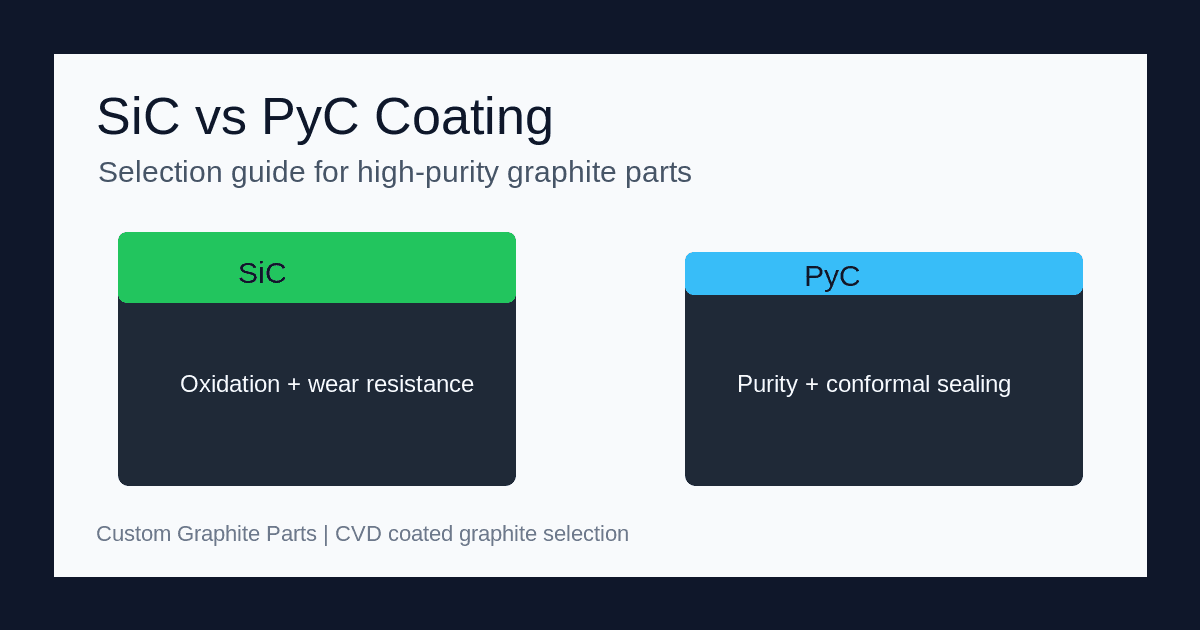
Silicon Carbide (SiC) vs. Pyrolytic Carbon (PyC) Coating on Graphite Parts: A Selection Guide
SiC vs PyC coating selection guide for graphite parts in semiconductor, furnace, and crystal-growth service, with limits, risks, checklist, and RFQ guidance.
Graphite Hot Zones for SiC Crystal Growth (PVT): Sourcing, Purity, and Machining Guide
Specify graphite hot zones for SiC PVT crystal growth: purity limits, GDMS evidence, machining risks, supplier questions, and RFQ steps for global buyers.