
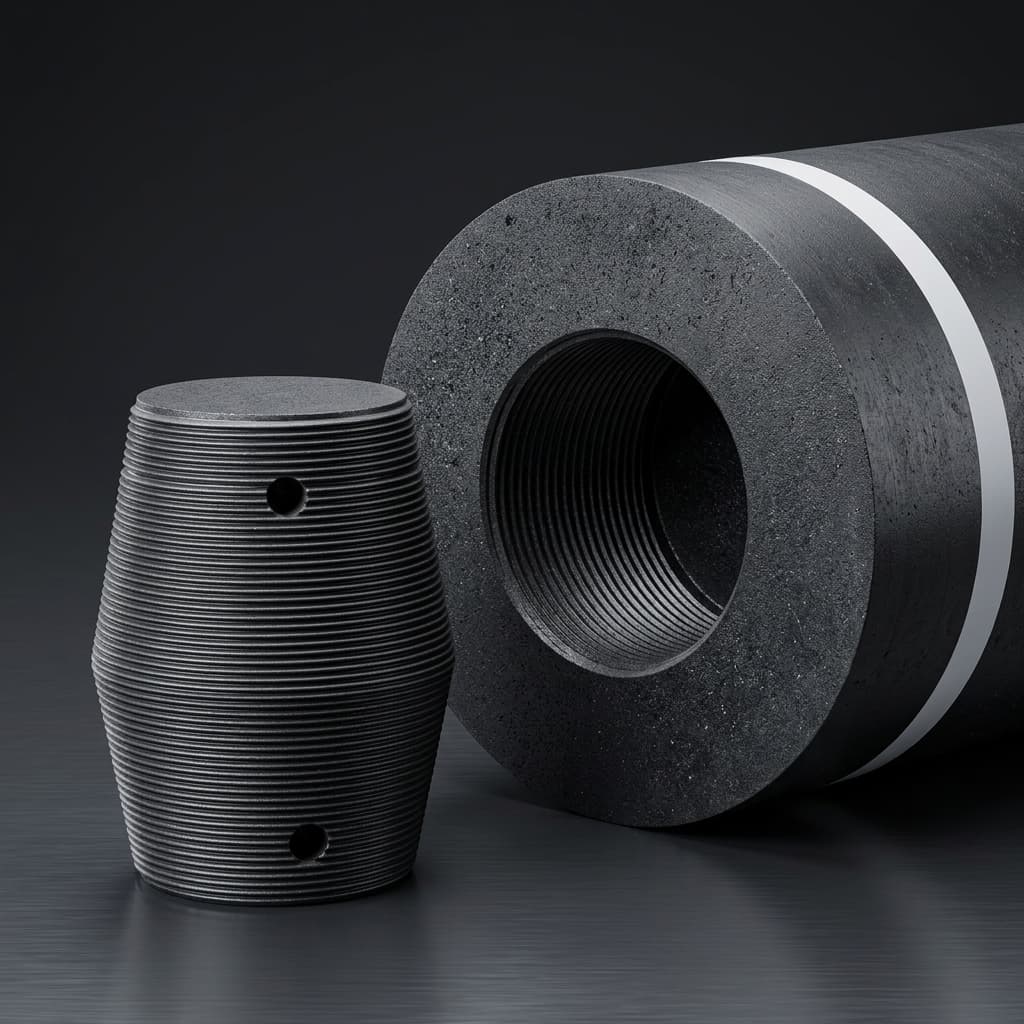
Copper vs. Graphite EDM Electrodes: A Cost and Performance Analysis
Should you use copper or graphite for your EDM electrodes? We break down the differences in machining speed, wear resistance, surface finish, and overall cost to help plastic mold shops make the best choice.
Decision-Level Conclusion: The shift from copper to graphite in Electrical Discharge Machining (EDM) is accelerating globally. While copper remains the undisputed champion for achieving absolute mirror finishes without polishing, graphite dominates in material removal rates (MRR), electrode machining speed, and thermal stability. For plastic injection mold shops looking to reduce lead times and lower overall tooling costs, switching to high-quality graphite EDM electrodes is the highest-ROI operational pivot available today.
For decades, tool and die makers have debated the merits of copper versus graphite for sinker EDM operations. Historically, European and American aerospace and mold shops leaned heavily toward graphite, while Asian electronics mold shops preferred copper. Today, as global supply chains converge and CNC milling technology advances, graphite is increasingly becoming the de facto standard.
If your shop is still using copper for the majority of its sinker operations, here is a deeply objective, data-backed analysis of why transitioning to graphite might dramatically improve your bottom line.
1. CNC Machining the Electrode: Speed and Tool Wear
Before an electrode can spark a mold cavity, it must be machined on a CNC mill. This is where graphite holds a massive, undeniable advantage.
Graphite Machinability
Graphite is incredibly easy to machine. CNC mills can run at maximum feed rates and spindle speeds when cutting graphite. A complex, multi-ribbed electrode that takes 4 hours to mill in copper might take just 45 minutes in graphite. Furthermore, graphite does not burr. When the CNC cycle finishes, the electrode is done—no manual deburring under a microscope required.
Copper Machinability
Copper is gummy, sticky, and prone to severe burring. It requires slower feed rates, specific cutting tool geometries, and copious amounts of coolant to prevent the copper from welding to the endmill. Manual deburring is almost always mandatory, adding hidden labor costs.
The Dust Caveat
Graphite produces highly abrasive, highly conductive fine dust during milling. You must have a dedicated, dust-controlled graphite CNC machine equipped with specialized vacuum extraction and sealed linear guideways. If you mill graphite on a standard VMC using coolant, you will create an abrasive slurry that will destroy the machine's ballscrews in months.
2. In the EDM Tank: Material Removal Rate (MRR)
Time is money in the EDM tank. The speed at which the electrode erodes the P20 or H13 tool steel dictates your shop's throughput and delivery lead times.
Graphite can handle significantly higher amperage than copper without suffering catastrophic melting or wear. This allows operators to program highly aggressive roughing cuts. In a typical roughing pass on H13 tool steel, graphite can remove metal up to 2 to 3 times faster than copper.
Because copper has a relatively low melting point (1,085°C), pushing too much amperage through a copper electrode causes the electrode itself to melt and wear excessively. Roughing passes are inherently bottlenecked by copper's thermal limits.
3. Electrode Wear and Geometry Retention
Electrode wear (the percentage of the electrode that degrades while burning the steel) directly impacts the accuracy of the final mold cavity. High wear means you must machine multiple redundant electrodes (a rougher, a semi-finisher, and a finisher) to complete a single cavity.
| Feature | Copper Wear | Graphite Wear (Premium Isostatic) |
|---|---|---|
| High-Amperage Roughing | Very High (melts easily) | Low (sublimates at 3,300°C) |
| Low-Amperage Finishing | Low | Low to Medium |
| Sharp Corner Retention | Poor (corners round off quickly) | Excellent (maintains crisp edges) |
| Thin Rib Machining | Prone to deflection during CNC | Highly rigid, no deflection |
Graphite does not melt; it sublimates (turns directly from a solid to a gas) at around 3,300°C. This exceptional thermal stability means high-quality, ultra-fine grain isostatic graphite can maintain razor-sharp corners and fine ribs far longer than copper, often allowing shops to skip the semi-finishing electrode entirely and go straight from rougher to finisher.
4. Surface Finish Capabilities (VDI)
This is the one area where copper traditionally holds its ground and remains indispensable for specific industries (like high-end optical lenses or clear polycarbonate molds).
Because copper is a dense, homogeneous metal with no granular structure, it can produce an absolutely flawless, uniform surface finish in the cavity. If you need a VDI 12 (Ra 0.4 μm) or finer mirror finish directly out of the EDM tank with zero manual polishing, copper is the safer bet.
Graphite is composed of compressed particles (grains) and microscopic pores. Even with an ultra-fine grain graphite (e.g., 1μm grain size like POCO EDM-3), the resulting EDM finish will have a slightly matte, uniform texture. While modern EDM generators (like Makino or AgieCharmilles) paired with premium graphite can achieve sub-VDI 16 finishes, achieving a true, flawless optical mirror finish usually requires brief manual polishing after sparking.
5. Weight, Handling, and Raw Material Cost
Density and Ergonomics
- Copper: Density of 8.9 g/cm³.
- Graphite: Density of roughly 1.8 g/cm³.
Graphite is exactly 5 times lighter than copper. For large automotive fascia or dashboard molds, handling a 50kg copper electrode is dangerous, requires overhead cranes, and induces severe wear on the EDM machine's Z-axis servos, severely affecting drop accuracy. The identical electrode in graphite weighs just 10kg, allowing for easy manual handling and rapid tool changes.
Raw Material Cost
While the price per kilogram of premium isostatic graphite is generally higher than copper, the price per cubic centimeter (volume) is usually cheaper. Because you buy electrode blanks by volume, not weight, a block of graphite is often less expensive than the exact same sized block of copper. When you factor in the massive reduction in CNC machining time, the overall cost of a finished graphite electrode is almost always lower than a copper one.
The Verdict: Strategic Sourcing for Mold Shops
Stick with Copper if:
- You are EDMing exotic alloys (like tungsten carbide) where copper-tungsten is required.
- The final plastic part requires an absolute, flawless optical mirror finish (e.g., headlight reflectors, optical lenses) straight from the mold, and hand polishing the cavity is impossible.
- Your shop does not have adequate dust extraction for machining graphite blanks, and you strictly prefer to machine everything in-house.
Switch to Graphite if:
- You are producing complex ribs, deep slots, or sharp geometries that require high accuracy and low wear.
- You want to drastically reduce CNC milling times and eliminate manual deburring.
- You are manufacturing large molds where the weight of a copper electrode would be unmanageable.
- You are looking to increase your EDM tank throughput by speeding up roughing cycles.
Don't have a graphite CNC machine? You don't have to miss out on the benefits. If you lack the internal setup to machine graphite dust safely, consider our plastic mold EDM electrode sourcing service. We supply fully machined, CMM-inspected, ready-to-spark graphite electrodes directly from your 3D CAD files, delivered straight to your shop floor. Let us handle the dust; you handle the sparks.
Engineering FAQ: Copper vs. Graphite EDM Electrodes
1. Which material produces a better surface finish in EDM?
Copper generally yields a smoother, more polished surface finish (down to Ra 0.4 µm) without requiring specialized powder-mixed dielectric fluid. Graphite, due to its granular nature, typically leaves a matte finish (Ra 1.6 µm). However, ultra-fine grain isostatic graphite can bridge this gap for high-precision molds.
2. Can I tap threads into a graphite EDM electrode?
Yes, but you must use coarse threads (e.g., M8x1.25) and maintain a deeper thread engagement (2.5x to 3x diameter) compared to copper. For a complete guide on designing threads in graphite, refer to our Graphite CNC Machining Design Guide.
3. Why is my graphite electrode chipping during CNC machining?
Graphite is highly abrasive and brittle. Chipping occurs when using dull tools, excessive feed rates, or designing sharp 90-degree internal corners. Always design with at least an R1.0 mm fillet to prevent stress fractures during milling.
Author
Graphite CNC machining, EDM electrode, mold tooling, and export-aware sourcing specialists.
Categories
More Posts

Understanding Graphite Export Controls: What Global Buyers Need to Know in 2026
A practical guide to navigating China's export controls on high-purity and high-density artificial graphite. Learn how to secure end-user certificates, prevent supply chain disruptions, and manage lead times.
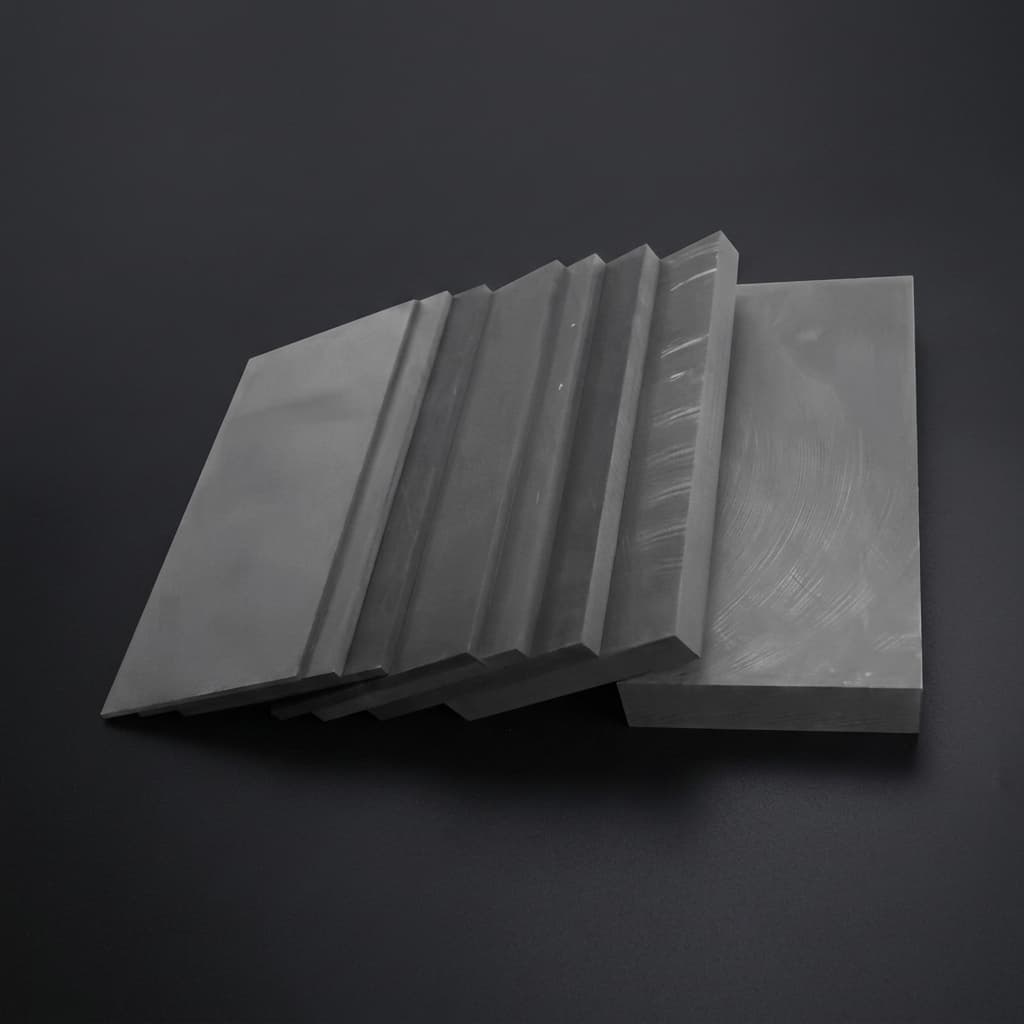
Isostatic vs. Molded Graphite: Which Grade Should You Choose?
An engineering guide comparing isostatic and molded graphite. Learn about grain size, density, strength, and how to select the right graphite grade for EDM, continuous casting, and vacuum furnaces.
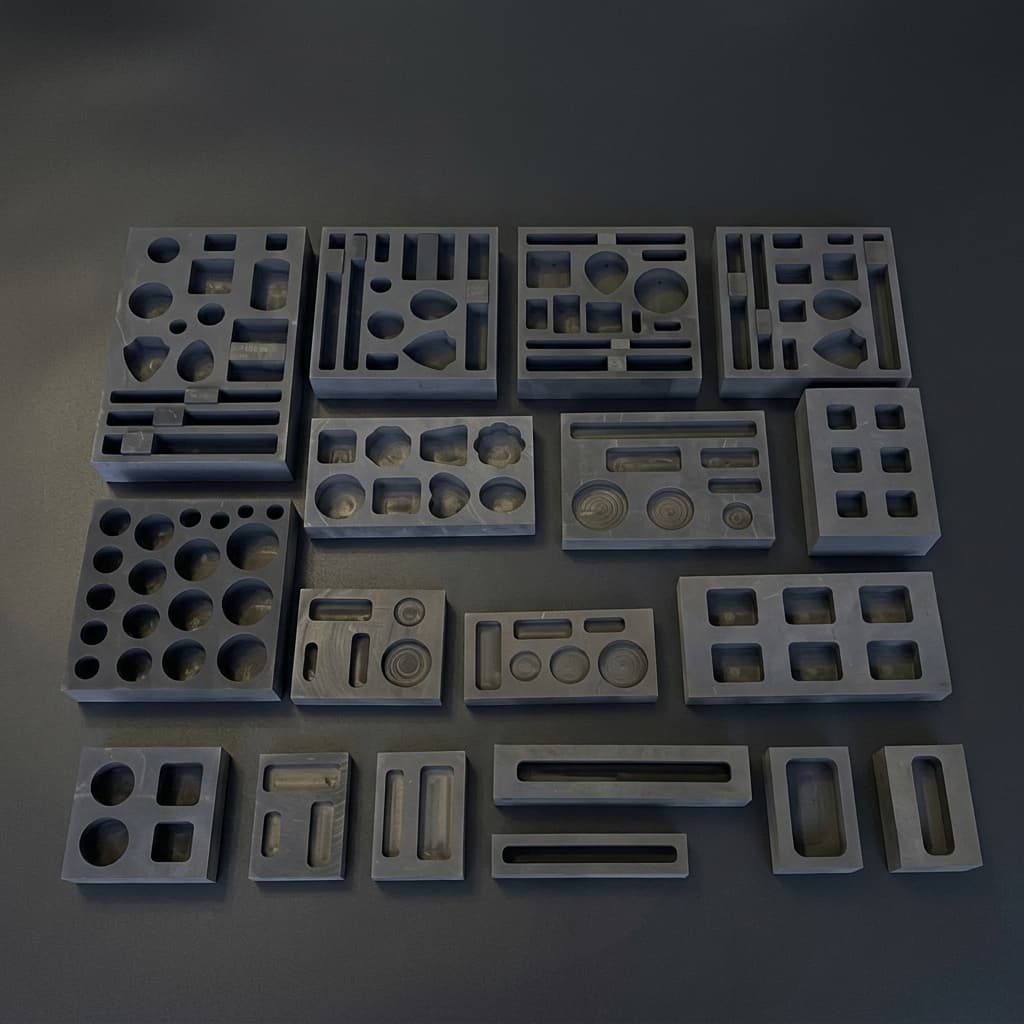
Carbon-Carbon (C/C) Composites vs. Isostatic Graphite: Vacuum Furnace Fixture Selection Guide
Compare C/C composites vs isostatic graphite for vacuum furnace fixtures: thermal mass, TCO, risks, checklist, and RFQ guidance from Custom Graphite Parts.