
HCl transfer pump seal, moderate temperature
Phenolic resin-impregnated graphite can be a starting point if the corrosion chart covers the concentration.
RFQ data: Drawing, seal face size, HCl concentration, pressure, and peak temperature.
Impregnant fit checker + sourcing guide
Screen acid-resistant graphite parts by chemical media, concentration, and temperature to shortlist phenolic resin, PTFE/fluoropolymer, or chart-approved impervious graphite grades for pump seals, reactor internals, and heat exchangers.
Output: Impregnant type + risk boundary · Evidence reviewed July 26, 2026
Complete RFQs are easier to review within 1-2 business days when drawings, graphite grade, quantity, and destination are included.
Ensure the mechanical design (e.g., wall thickness, sealing faces) accounts for the brittle nature of graphite.
Send 2D/3D drawings with fluid specs for a final quotation.
Buyer: Chemical plant engineers, pump OEMs, maintenance managers, and procurement teams. Use the compatibility checker output to shortlist an impregnant family and identify no-go boundaries. Final material release still depends on a current corrosion chart, pressure/temperature review, and drawing-based manufacturability check.
Material capability limits
These sources are used as screening evidence, not as a substitute for a supplier corrosion chart. Temperature, pressure, additives, and part geometry can move a duty outside a generic acid family recommendation.
Mersen Graphilor product data · accessed July 26, 2026
Uses published impervious graphite families as screening benchmarks: phenolic, PTFE, and carbon-impregnated options have different design-temperature ranges and chemical resistance limits.
S2Why impregnation is required for wet chemical serviceSemco Carbon impervious graphite note · accessed July 26, 2026
Explains that manufactured graphite contains open porosity before treatment and that impregnation fills connected pores so corrosive liquids and gases cannot leak through the part.
S3Oxidizing media boundaryMersen Graphilor chemical resistance notes · accessed July 26, 2026
Separates common-acid service from oxidizing-media limitations. This page therefore treats fuming sulfuric acid, hot concentrated sulfuric acid, nitric blends, peroxide, chlorine, and bromine service as supplier-chart decisions.
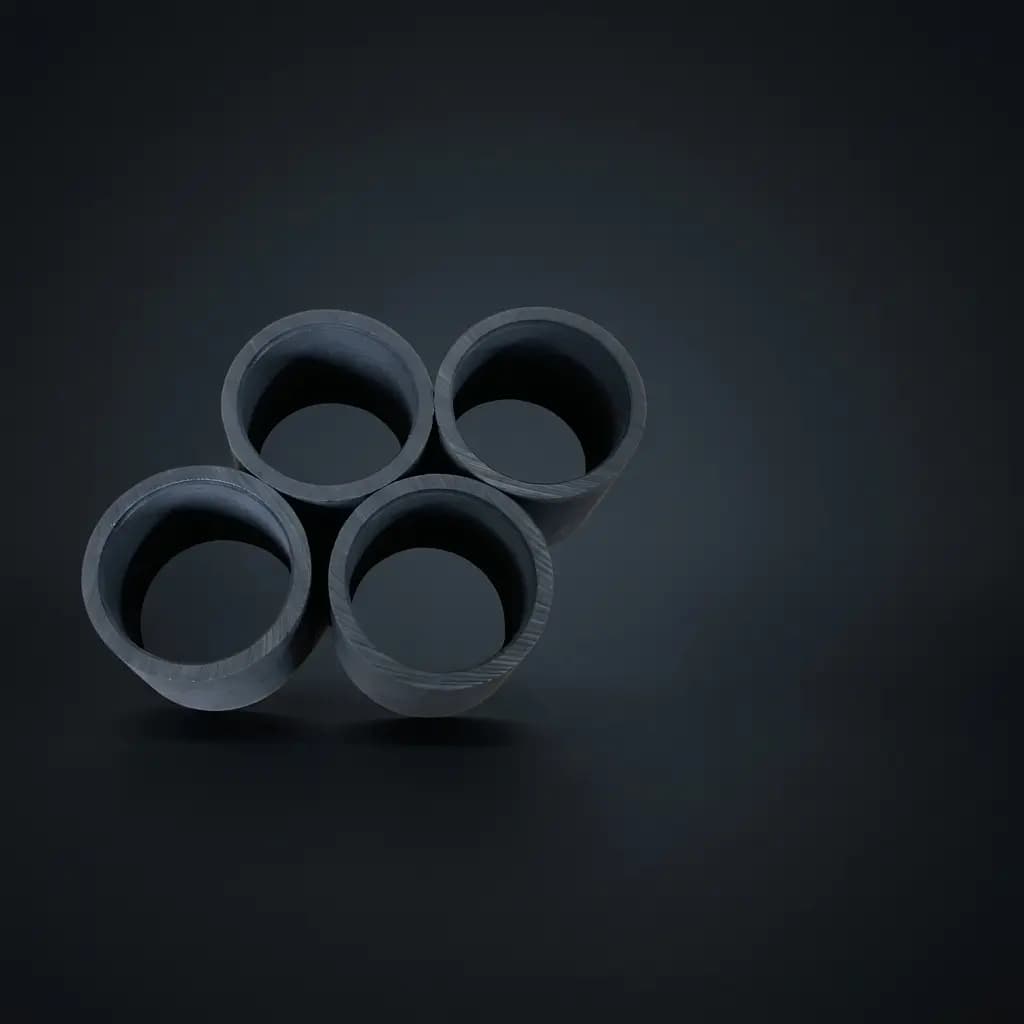
Cross-section logic: A resin-impregnated graphite bushing/seal contains hot corrosive fluid along a rotating shaft.
| Impregnant type | Typical Temp Limit | Best fit | Do not use for |
|---|---|---|---|
| Phenolic Resin | Published examples around 200-220°C by grade | Common non-oxidizing acids such as HCl and H3PO4, plus chart-approved moderate sulfuric duties | HF without chart support, fuming acids, strong oxidizers, and duties above the named grade limit |
| PTFE / fluoropolymer | Published PTFE-impregnated benchmark about 250°C | HF, fluoride-containing acids, and solvent duties when the supplier chart covers the exact service | Unverified oxidizer blends, pressure/creep conditions outside the grade data, and hot fuming sulfuric service |
| Carbon-impregnated impervious graphite | Higher-temperature published options exist by named grade | High-temperature corrosive duties when the supplier chart and pressure design explicitly cover the media | As a generic substitute for sulfuric, HF, or oxidizing mixed acids without chart evidence |
| Silicon carbide or alternate material | Not a graphite temperature limit | Duties where graphite or its impregnant is outside the approved corrosion window | Cases where graphite self-lubrication, thermal conductivity, or machinability is required and the acid duty is chart-safe |
Use this table to decide whether the checker output is enough for an initial RFQ or whether the duty needs supplier chart review before price and lead time are released.
| Condition | Decision | Risk | Control |
|---|---|---|---|
| HF or fluoride-containing acid | Usually review PTFE/fluoropolymer impregnation first | The graphite body is not enough; the pore sealant must be compatible and leak-tight. | Provide HF concentration, temperature, pressure, and requested leak test before quotation. |
| Fuming or hot concentrated H2SO4 | No automatic graphite grade selection | Oxidizing behavior can move the duty outside standard impervious graphite assumptions. | Request supplier chart confirmation and compare SiC or another alternative if uncovered. |
| Temperature above 120°C | Name the exact impervious graphite grade | Phenolic, PTFE, and carbon impregnation have different temperature windows. | Separate normal temperature, peak temperature, dwell time, and pressure in the RFQ. |
| Mixed acids, solvents, or oxidizer additives | Treat as chart-review duty | A minor additive can attack the impregnant even when the primary acid looks compatible. | Disclose trace solvents, peroxide, chlorine, nitric acid, bromine, and cleaning chemicals. |
These examples show how the tool result should translate into the next sourcing action instead of a final material guarantee.
Phenolic resin-impregnated graphite can be a starting point if the corrosion chart covers the concentration.
RFQ data: Drawing, seal face size, HCl concentration, pressure, and peak temperature.
PTFE/fluoropolymer-impregnated graphite is the first review path, not bare graphite.
RFQ data: HF percentage, water content, pressure, mating material, and leak-test target.
Stop generic selection and run a chart-backed review before quoting graphite.
RFQ data: Sulfuric concentration range, fuming/oleum status, additives, normal and upset temperature, and test plan.
Important
Graphite is brittle. Avoid sharp internal corners (use radii) and ensure proper interference fit tolerances if shrink-fitting into metal housings.
Manufactured carbon graphite can contain connected open porosity before treatment. Without impregnation, corrosive liquids or gases can migrate through the material. Vacuum-pressure impregnation with resin, PTFE/fluoropolymer, or another approved sealant is what makes the component suitable for wet chemical service.
Use PTFE or another fluoropolymer impregnant when the supplier corrosion chart supports it for the exact media, concentration, pressure, and temperature. HF service often drives this choice, but it should not be treated as a universal answer for every oxidizer or solvent blend.
Sometimes, but concentration, water content, additives, and temperature change the decision. Dilute and moderate sulfuric duties may fit an approved impervious graphite grade. Fuming sulfuric acid, hot concentrated sulfuric acid, and oxidizing sulfuric blends should not be selected from a generic matrix; request a chart-backed review and compare alternatives such as silicon carbide when the duty is outside the graphite grade window.
The graphite skeleton and the pore sealant have different limits. Published impervious graphite examples place common phenolic grades around 200-220°C and PTFE-impregnated grades around 250°C, but the usable limit depends on the named grade, pressure, geometry, and dwell time. If the impregnant degrades, leakage paths can reopen even though the graphite body still looks intact.
List both normal temperature and absolute peak temperature in the RFQ, including spike duration and frequency. Short excursions may still affect resin aging, fluoropolymer creep, thermal shock, or seal face flatness.
No. The checker is a front-end screening tool that helps organize the RFQ. Final material release still requires the exact chemical recipe, concentration, pressure, temperature, part geometry, and supplier grade data.
Typical candidates include mechanical seal rings, bushings, heat exchanger blocks, tube-sheets, reactor dip tubes, spargers, and liners where corrosion resistance, thermal conductivity, and self-lubricating behavior matter.
Avoid a generic graphite selection for strong oxidizers, fuming acids, hot concentrated sulfuric acid, unknown mixed acids, slurry abrasion without a wear review, or designs with thin fragile sections that cannot tolerate graphite brittleness.
Seal-face flatness and finish are drawing-controlled. Acid-resistant graphite seal faces can be lapped against hard counterfaces such as silicon carbide or alumina, but final flatness depends on diameter, geometry, grade, impregnation sequence, and inspection method.
Send a 2D drawing or STEP file, chemical mixture including trace solvents and water content, concentration range, normal and peak temperature, pressure, mating material, leakage requirement, inspection standard, quantity, destination, and requested certificates.
For high-risk acids, mixed-media duties, tight leakage limits, or new geometries, a sample or coupon test is the lowest-risk path before committing to production quantities.
Inquiry Email
Complete RFQs are easier to review within 1-2 business days when drawings, grade, quantity, and destination are included.
WhatsApp Alignment
+8618857971991
Use WhatsApp for quick alignment; send drawings by email for traceable review.