
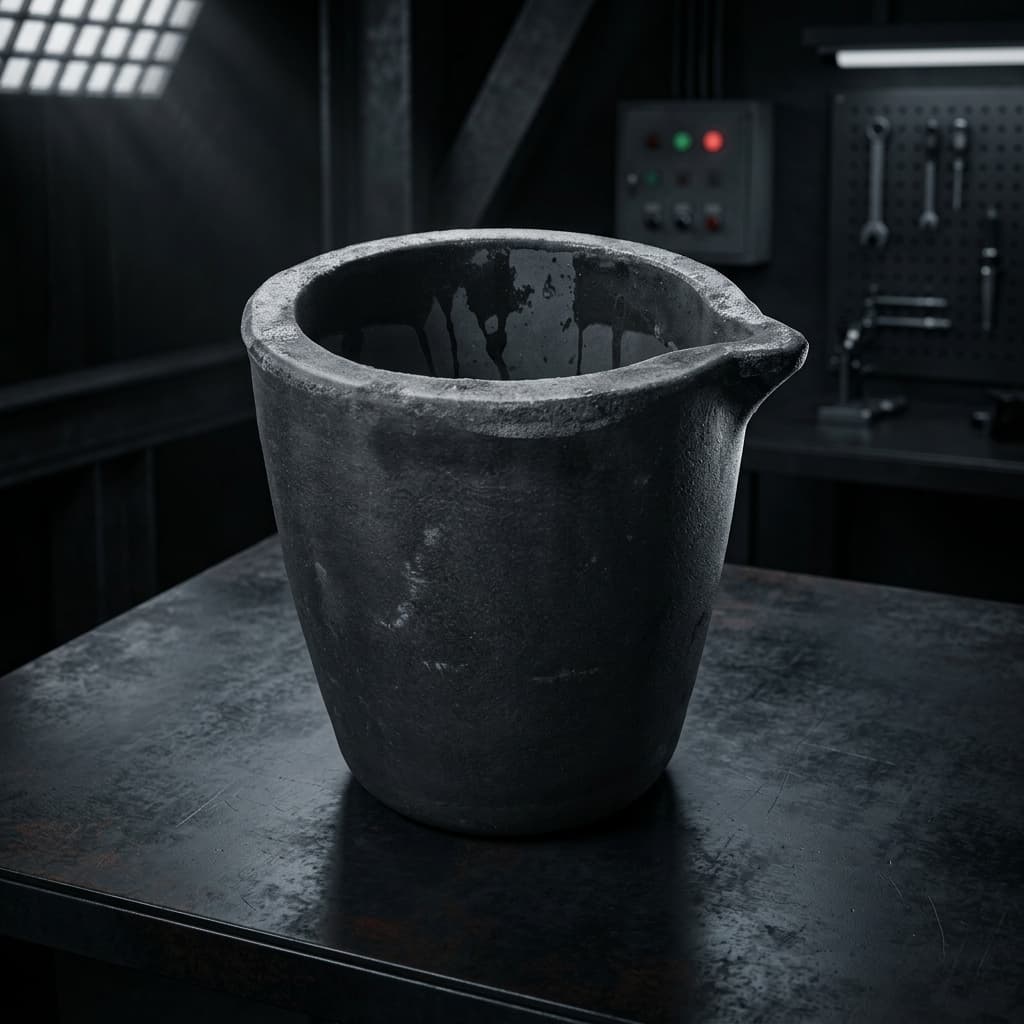
Graphite Hot Zones for SiC Crystal Growth (PVT): Sourcing, Purity, and Machining Guide
Specify graphite hot zones for SiC PVT crystal growth: purity limits, GDMS evidence, machining risks, supplier questions, and RFQ steps for global buyers.
Decision-Level Conclusion: In the Physical Vapor Transport (PVT) growth of Silicon Carbide (SiC) crystals, the graphite hot zone is not merely a container; it is an active participant in the chemical reaction. Using standard "high purity" graphite instead of semiconductor-grade ultra-high purity graphite (ash content < 5 ppm verified by GDMS) will introduce metallic impurities like Vanadium and Boron, leading to micropipes and altered electrical resistivity in the final SiC wafer. Partnering with a CNC machine shop capable of extreme tolerances and rigorous contamination control is non-negotiable.
The explosive growth of the electric vehicle (EV) market and high-power electronics has driven an unprecedented demand for Silicon Carbide (SiC) power devices. At the heart of this manufacturing revolution is the Physical Vapor Transport (PVT) method used to grow SiC single crystals (boules).
Unlike silicon crystal growth (Czochralski process) which occurs at a relatively manageable 1,414°C, SiC PVT growth demands temperatures exceeding 2,200°C in a precisely controlled, sealed environment. At these extreme temperatures, almost all traditional refractory metals and ceramics fail, melt, or severely contaminate the process.
The only material capable of surviving, insulating, and conducting heat reliably in this environment is isostatic graphite.
This comprehensive evergreen guide is designed for procurement teams, thermal engineers, and production managers in the semiconductor industry. We will break down exactly how to specify, source, and evaluate graphite components for SiC PVT hot zones, ensuring maximum crystal yield and minimizing costly defects.
Scope and limits, last reviewed July 23, 2026: this guide is for sourcing and engineering review of graphite crucibles, heaters, seed holders, insulation, and porous graphite pieces used in SiC PVT hot zones. It does not replace a furnace OEM thermal model, a graphite grade datasheet, or your own crystal-growth recipe. Treat every numeric band below as an RFQ screening range that must be confirmed against the chosen grade, drawing, furnace geometry, atmosphere, and qualification lot.
1. The Architecture of a PVT SiC Hot Zone
Before diving into material specifications, it is crucial to understand the distinct graphite components that make up the PVT hot zone and the extreme conditions they endure.
The PVT process involves sublimating SiC powder at the bottom of a crucible and allowing the vapor species (Si, Si2C, and SiC2) to travel upward and condense onto a slightly cooler SiC seed crystal.
The Core Graphite Components:
- The Growth Crucible: The primary vessel holding the SiC powder and the seed crystal. It must maintain a perfectly sealed environment while withstanding over 2,200°C.
- The Seed Holder (Susceptor): A highly precise graphite plate that holds the seed crystal. It must have near-perfect flatness to prevent mechanical stress on the growing boule.
- The Heater Elements: Conductive graphite elements (often cylindrical or picket-fence style) that generate the immense heat required via resistive heating or RF induction.
- Rigid Graphite Insulation (Felt / Board): Layers of porous carbon or graphite insulation that wrap the crucible to maintain the steep and precise thermal gradient required for vapor transport.
- Porous Graphite Diffusers: An emerging component placed within the powder charge or vapor path to regulate the flow of sublimated gases, enhancing temperature homogeneity and reducing defects.
Each of these components demands a different balance of thermal conductivity, electrical resistivity, and porosity. However, they all share one absolute, non-negotiable requirement: Ultra-High Purity.
2. Material Purity: Why "High Purity" Is Not Enough
In many industrial applications (like continuous casting or standard vacuum furnaces), "high purity graphite" implies an ash content of around 300 ppm (parts per million) to 500 ppm.
In the realm of SiC semiconductor growth, 300 ppm is catastrophic.
At 2,200°C, metallic impurities present in the graphite crucible will volatilize and become incorporated into the growing SiC crystal. These impurities act as "yield killers."
The Impact of Specific Impurities:
- Vanadium (V), Titanium (Ti), and Iron (Fe): These transition metals create deep-level defects in the SiC crystal lattice. They drastically reduce carrier lifetime, destroying the performance of high-frequency power devices.
- Boron (B) and Aluminum (Al): These elements act as p-type dopants. If they migrate from the graphite into a semi-insulating SiC crystal, they will alter the electrical resistivity, causing the wafer to fail specification.
- Nucleation of Micropipes: Clusters of metallic impurities acting as nucleation sites can trigger the formation of micropipes—hollow tubes running through the crystal that cause complete device failure in the affected area.
The Ash Content Specification for PVT
To achieve high-yield 4H-SiC or 6H-SiC boules, the graphite hot zone components must be purified using halogen gases at extreme temperatures (>2500°C). This process extracts the metallic elements.
For semiconductor-grade SiC growth, the absolute maximum allowable ash content is < 10 ppm. For advanced, high-yield processes, top-tier buyers demand < 5 ppm, and often push towards < 2 ppm.
Verification: GDMS Testing
When sourcing graphite components, never accept a generic "High Purity" label. You must demand a Glow Discharge Mass Spectrometry (GDMS) report. GDMS breaks down the impurity levels element by element, measuring down to the parts per billion (ppb) level. A GDMS report proves whether the material meets the strict limits for Boron, Vanadium, and other critical metals.
If your RFQ also includes non-PVT furnace fixtures or generic purified blocks, benchmark those requirements against broader high-purity graphite component sourcing criteria before applying the stricter SiC PVT limits.
3. Comparing Graphite Grades for SiC Growth
Not all graphite is created equal. To survive the thermal cycling and maintain structural integrity, the graphite must be Isostatic (having uniform properties in all directions).
Below is a comparative breakdown of graphite specifications, highlighting why semiconductor grade is essential for PVT.
| Parameter | Standard Molded Graphite | Isostatic Graphite (Standard) | Semiconductor Grade Isostatic Graphite | Why It Matters for SiC PVT |
|---|---|---|---|---|
| Forming Method | Extrusion / Molding | Cold Isostatic Pressing (CIP) | Cold Isostatic Pressing (CIP) | Isostatic pressing ensures uniform thermal expansion, preventing warping. |
| Ash Content (Purity) | 500 - 1500 ppm | 200 - 400 ppm | < 5 ppm (often < 2 ppm) | Prevents volatile metal contamination of the SiC crystal lattice. |
| Grain Size | 0.8 mm - 2.0 mm | 10 - 20 μm | 5 - 15 μm | Fine grain allows for extreme machining tolerances and smooth sealing surfaces. |
| Density | 1.65 - 1.75 g/cm³ | 1.75 - 1.85 g/cm³ | 1.82 - 1.88 g/cm³ | High density resists aggressive vapor etching and structural degradation. |
| Thermal Expansion (CTE) | Highly Anisotropic | Isotropic (4.0 - 5.5 x10⁻⁶/°C) | Isotropic (Specially matched) | Must match the thermal dynamics of the furnace to prevent crucible cracking. |
| Purification Method | Standard Bake | Standard Graphitization | High-Temp Halogen Gas Purification | Removes trace metals like Boron, Vanadium, and Iron at the atomic level. |
For vacuum furnace parts outside the SiC crystal-growth cell, compare the acceptance envelope with high-purity graphite heaters and crucibles so the PVT hot zone is not under-specified by a general furnace standard.
4. CNC Machining: Tolerances, Threads, and Sealing
Having the world's purest graphite is useless if the crucible doesn't seal properly. The PVT process relies on precise vapor pressure control. If Si and C vapors leak through poorly machined joints, the pressure drops, the stoichiometry changes, and the crystal growth fails.
Tight Sealing and Flatness
The interface between the crucible body and the lid must be machined to extreme flatness (often within 0.01 mm to 0.02 mm across the diameter). The seed holder must also be perfectly flat to prevent any mechanical stress on the seed, which could trigger dislocations (basal plane dislocations or threading edge dislocations) in the crystal.
Threading Considerations
At 2,200°C, different parts of the crucible will expand at slightly different rates due to the thermal gradient.
- Avoid standard fine V-threads, which will bind, gall, or shear off.
- Use coarse, rounded threads (knuckle threads) designed specifically for high-temperature graphite expansion. The thread clearance must be mathematically calculated based on the specific Coefficient of Thermal Expansion (CTE) of the chosen graphite grade.
Contamination Control During Machining
This is where many general-purpose machine shops fail. A shop might buy <5 ppm graphite, but if they machine it on the same CNC mill they used for aluminum, brass, or copper parts yesterday, the coolant and ambient dust will instantly contaminate the porous graphite surface. Semiconductor-grade graphite must be machined in dedicated, clean-room-like environments, running dry (with powerful dust extraction, no liquid coolants), using dedicated tooling to prevent cross-contamination.
5. Procurement and Engineering Checklist
When vetting a supplier for your SiC PVT graphite components, use this checklist to ensure they can meet semiconductor standards:
- Material Provenance: Can they provide the brand and exact grade of the raw isostatic graphite block?
- Purity Verification: Do they provide a GDMS (Glow Discharge Mass Spectrometry) report proving < 5 ppm ash content for the specific batch?
- Dedicated Machining: Is the graphite machined in a dedicated, dry facility to prevent cross-contamination from metal chips and cutting fluids?
- Tolerance Capability: Can they consistently achieve 0.01mm flatness on crucible sealing faces?
- Dimensional Metrology: Do they provide comprehensive CMM (Coordinate Measuring Machine) inspection reports with the shipped parts?
- Packaging: Are the finished parts vacuum-sealed in clean-room bags immediately after final ultrasonic/vacuum cleaning?
- Traceability: Is every component laser-marked with a batch and serial number for lifecycle tracking?
6. The Role of Porous Graphite in Advanced PVT
While the main crucible must be dense and impermeable, there is a growing trend toward using highly controlled porous graphite components inside the hot zone.
Porous graphite plates or diffusers placed above the SiC powder charge help regulate the flow of the sublimated gas species. By forcing the gas through a porous medium, the flow becomes highly uniform, and the temperature gradient across the vapor front is stabilized. This reduces thermal stress and has been shown to significantly reduce the defect density (such as micropipes and stacking faults) in large-diameter (6-inch and 8-inch) SiC boules.
Sourcing porous graphite requires the same stringent < 5 ppm purity standards, but adds the complexity of requiring specific, uniform pore sizes and gas permeability rates.
7. Frequently Asked Questions (FAQ)
What happens if I use 50 ppm graphite instead of < 5 ppm?
At 2,200°C, the impurities will volatilize. Transition metals like Vanadium will integrate into the SiC lattice, causing deep-level defects that ruin carrier lifetime. Elements like Boron will change the resistivity of the wafer. For R&D purposes, 50 ppm might suffice, but for commercial production of high-yield SiC wafers, it will result in unacceptable defect rates.
Can a PVT graphite crucible be reused?
Crucible reuse is limited. The extreme temperatures and aggressive SiC vapor inevitably cause micro-cracking and material degradation (often due to the vapor etching the graphite). Some components might survive 2 to 3 runs, but the risk of catastrophic failure (crucible cracking and destroying the boule) increases exponentially. Many high-end producers treat the crucible as a single-use consumable to guarantee maximum yield.
Why is dry machining absolutely necessary?
Graphite is inherently porous. If liquid CNC coolants (which contain oils, water, and metal trace elements from previous jobs) touch the graphite, they will soak into the pores like a sponge. No amount of baking can fully remove these contaminants, and they will ruin the crystal growth process.
Should graphite parts be coated with SiC?
For PVT growth crucibles, bare ultra-high-purity graphite is standard. However, in Chemical Vapor Deposition (CVD) and epitaxy processes (the step after slicing the wafer), the graphite susceptors are almost always coated with a dense layer of high-purity CVD SiC. The coating prevents the graphite from being etched by hydrogen carrier gases and prevents any trace carbon or impurities from escaping.
If your project is actually an epitaxy or CVD susceptor program, review SiC-coated graphite susceptors and the SiC vs PyC coating selection guide instead of applying bare-PVT crucible assumptions.
8. Sourcing Your SiC Hot Zone Components
The yield of your SiC crystal growth facility is directly tied to the quality of your graphite hot zone. You cannot compromise on purity, and you cannot compromise on machining tolerances.
At Custom Graphite Parts, we understand the exacting standards of the semiconductor industry. We partner with top-tier raw material producers to source < 5 ppm isostatic graphite, and we machine these critical components in dedicated, contamination-free facilities utilizing state-of-the-art CNC technology.
Whether you are scaling up to 8-inch SiC production or optimizing a proprietary PVT reactor design, we have the engineering expertise to manufacture your crucibles, heaters, and susceptors to exact print specifications.
Stop risking your SiC yield on unverified graphite. Contact our engineering team today for an RFQ or to discuss your specific purity and tolerance requirements.
Sources & References
- Growths of SiC Single Crystals Using the Physical Vapor Transport Method with Crushed CVD-SiC Blocks Under High Vertical Temperature Gradients, PMC. Read more
- Ash Content in High Purity Graphite for Semiconductor Applications, SiC Crystal Crucibles Industry Insights. Read more
- Specialty Graphites for Semiconductor Crystal Growth, SGL Carbon Technical Literature. Read more
Author
Graphite CNC machining, EDM electrode, mold tooling, and export-aware sourcing specialists.
More Posts
Isostatic vs. Molded Graphite: Which Grade Should You Choose?
An engineering guide comparing isostatic and molded graphite. Learn about grain size, density, strength, and how to select the right graphite grade for EDM, continuous casting, and vacuum furnaces.
Graphite Heating Elements for Vacuum Furnaces: Design and Maintenance Guide
Learn how to optimize the lifespan of your vacuum furnace graphite hot zone. We cover heating element design, oxidation prevention, and when to choose molded over isostatic graphite.
Graphite Rotors and Shafts for Aluminum Degassing: Wear Resistance and Lifespan Optimization
A comprehensive engineering and procurement guide to extending the lifespan of graphite degassing rotors in aluminum foundries. Learn about high-temperature oxidation, anti-oxidation coatings, material selection, and operational best practices.